
Bitter Sugar: How Moroccan Sugar Built an Empire
When Morocco Sold Sugar to Europe
Five hundred years ago, Morocco was one of the great sugar producers of its time. Sugar paid for armies, filled a treasury, and helped build palaces that still stand today.
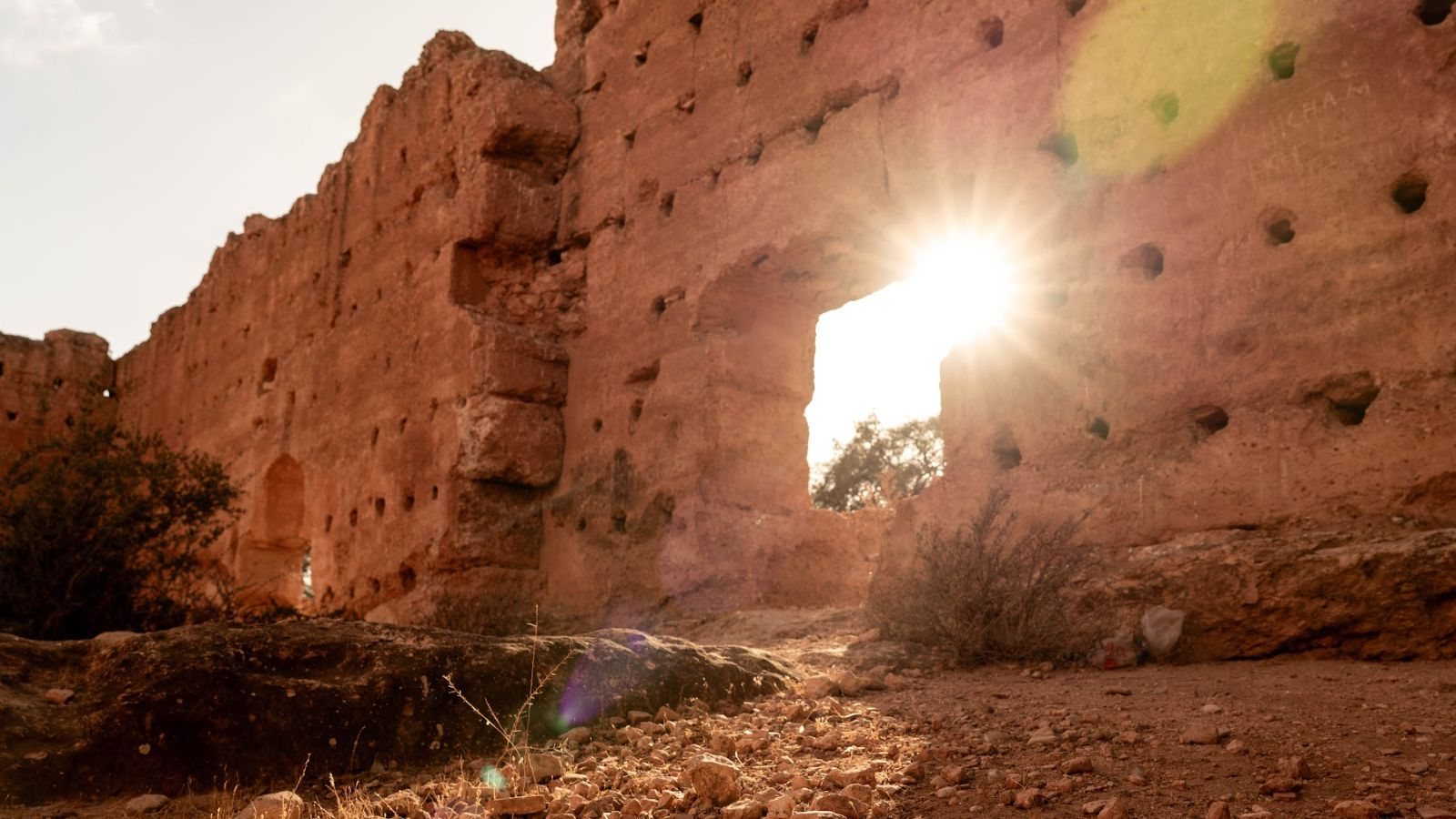
Not far from Essaouira, in a place called Ida Ougourd, the ruins of that industry still rise out of farmland. There is no sign, no fence, no guide. Just enormous walls, old water channels, and thousands of pieces of broken pottery scattered on the ground.
In the second episode of Turath Ummati, we go looking for what is left of Moroccan sugar, and for the people who paid its real price.
Power That Came to Them
In the early 16th century, Portugal and Spain were taking Moroccan coastal towns one after another, while the Wattasid rulers were too weak to stop them. The scattered tribes of Sous understood that no single tribe could win alone. They united, and pledged allegiance to a sharif named al-Qa'im bi-Amr Allah.
That is how the Saadian dynasty began. What sets it apart, the episode argues, is that its founder never sought power: power came to him.
But ruling meant defending the country. Defending it required an army, and an army required money. So the new state faced a simple question: where would a large, steady income come from? The answer came from the East.
An Industry Built From Nothing
The idea came from Egypt, whose rulers had grown rich from sugar cane. The Saadians saw a product Europe wanted, one that could be grown in Morocco and could fund the treasury. After 1517, everything changed.
Taroudant was restored and the villages around it began planting cane. The state took over land, dug canals and built sugar mills: between Taroudant and Oulad Teima, in Chtouka, in Chichaoua, near Safi, and here near Essaouira.
One detail still puzzles visitors. Sugar needs huge amounts of fresh water, yet some mills were built far from rivers. The answer lies in channels that ran for tens of kilometres from the Atlas, some of which can still be traced today.
Inside each mill, cane passed through a chain of rooms, each with its own task, from crushing to purifying to whitening. How a brown, rough syrup became sugar "as white as milk", ready to ship from Essaouira and Agadir to Britain, France, the Netherlands and Portugal, is one of the episode's most fascinating sequences.
The Bitter Taste
Europeans loved Saadian sugar for its rich taste. For those who made it, it had only one taste: bitterness.
The work was brutal: heat from the furnaces, water and ash, long days under the sun. Moroccan peasants were forced to work without pay. Others were taken from further south, from lands that are today Mali and Niger, and brought north to do work no body could endure for long.
The episode makes a striking connection. Just as the suffering on American cotton fields gave the world blues and jazz, the episode traces part of the roots of Gnawa music to the pain of those who worked Morocco's sugar mills: songs of pain, strength and hope for freedom.
Rise, Fall and Forgetting
Sugar money made the Saadians strong. It bought weapons, helped them take Marrakesh, and carried their ambitions all the way to Timbuktu. But everything that rises eventually falls. What brought the mills to a stop, and how they were forgotten for centuries before being rediscovered almost by chance, is told in the episode.
Today the site is open to the wind, with no protection and no explanation for visitors. Walking among the fragments, Zakaria picks up a piece of a clay sugar mould that has lain there for nearly 500 years. After the Al Haouz earthquake destroyed much of the Tinmel mosque, documenting places like this feels urgent.
Watch the full episode of Turath Ummati: a tribute to the people who made the sugar, who left us Gnawa, and who were forgotten.